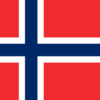
Designed in 1821 by MP Fredrik Meltzer (1779-1855), Norway’s flag is older than most though by no means the world’s oldest. With proportions of 8:11, it certainly is not the largest. Nor is its design unique, since all Scandinavian nations (except Greenland) use the iconic Nordic Cross. Red, white and blue are colours used by […]
Archive | Flag Facts RSS feed for this section
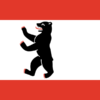
Flag of Berlin
Berlin officially adopted its flag in May 1954 as the flag of the free city of West Berlin. Designed by vexillologist Ottfried Neubecker, the flag is a red-white-red horizontal triband with the city emblem in the centre. It finished second in a 1952 contest, but the Senate of Berlin rejected the winner. The bear emblem […]
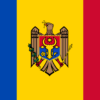
Flag of Moldova: 25 today
Today, 27 April 2015, marks the silver jubilee of the flag of Moldova. The flag is a blue, yellow and red vertical tricolour. It is almost identical to the flag of neighbouring Romania, reflecting their cultural and national affinity. Distinguishing the two flags is the central motif of Moldova’s coat of arms. This comprises a […]
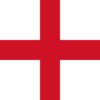
The many crosses of St George
The St George’s Cross, a red cross on a white background, is recognised worldwide as the flag of England. King Richard I, the Lionheart (1157–99) reputedly adopted St George’s Cross as his flag in the late 12th century, during the crusades. English soldiers also used red crosses throughout succeeding centuries, among many other religious flags […]
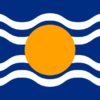
The West Indies Federation Flag
The West Indies Federation was a short-lived political union between various Caribbean islands, all British colonies. It existed from 3 January 1958 to 31 May 1962, and ‘mother of Jamaican art’ Edna Manley (1900–87) designed its flag. Her design comprised two pairs of wavy horizontal white stripes on blue to represent the Caribbean Sea. The upper […]

Easter Island Flag
The flag of Easter Island first flew in public, alongside the Chilean flag, on 9 May 2006. Easter Island is a special territory of Chile. Adorning the flag’s white field is a red Reimiro, an ornament worn around the chest. The Reimiro … served as an insignia of high rank, and the paramount chief of […]
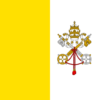
Flag of the Vatican City
The flag of the Vatican City belongs to the world’s smallest country by size and population. Perhaps this explains why its flag is so instantly recognisable. While the papacy dates back to 33 CE, the Vatican City did not become a sovereign state until 7 June 1929. With the ratification of the Lateran Treaty between […]
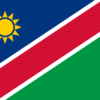
Flag of Namibia
Saturday 21 March 2015 marks 25 years since Namibia gained its independence from South Africa and officially adopted its national flag. Chosen from 835 publicly submitted designs, the origins of the flags lie in those of the South West Africa People’s Organisation (SWAPO) and the Democratic Turnhalle Alliance (DTA). Naturally, each colour represents a key […]
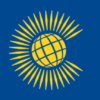
Flag of the Commonwealth of Nations
Today 9 March 2015 is Commonwealth Day. The Commonwealth first adopted its flag on 26 March 1976 and introduced a new pattern in November 2013. The Commonwealth Heads of Government Meeting in Ottawa, Canada, in 1973 suggested the idea, developing it from car pennants. Arnold Smith, the first Commonwealth Secretary-General, and Canadian Prime Minister Pierre […]
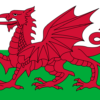
Flag of Wales: a blood-red dragon on a field of green
Y Ddraig Goch (The Red Dragon) became the official flag of Wales in 1959, although a dragon has represented the Principality since 830. We can date the symbol of the Red Dragon to the Roman occupation of Britain, or to Arthurian Legend. Merlin prophesied a battle between a red dragon (the Britons) and a white […]
Join or renew online