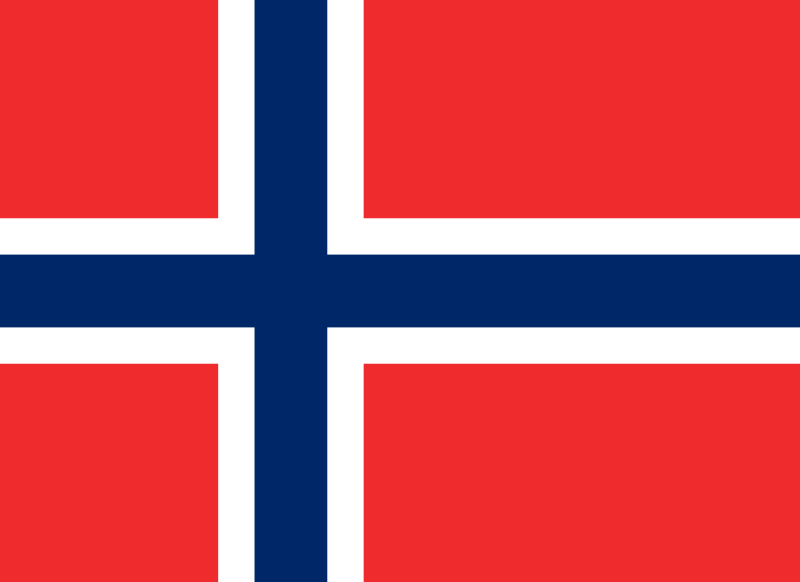
 Designed in 1821 by MP Fredrik Meltzer (1779-1855), Norway’s flag is older than most though by no means the world’s oldest.
With proportions of 8:11, it certainly is not the largest.
Nor is its design unique, since all Scandinavian nations (except Greenland) use the iconic Nordic Cross.
Red, white and blue are colours used by the US and UK flags to name but two.
And none of Norway’s three overseas territories – Bouvet Island, Queen Maud Land and Peter I Island – even has its own flag.
So why is Norway’s flag known as ‘The mother of all flags’?
Well, the following image is a perfect demonstration.
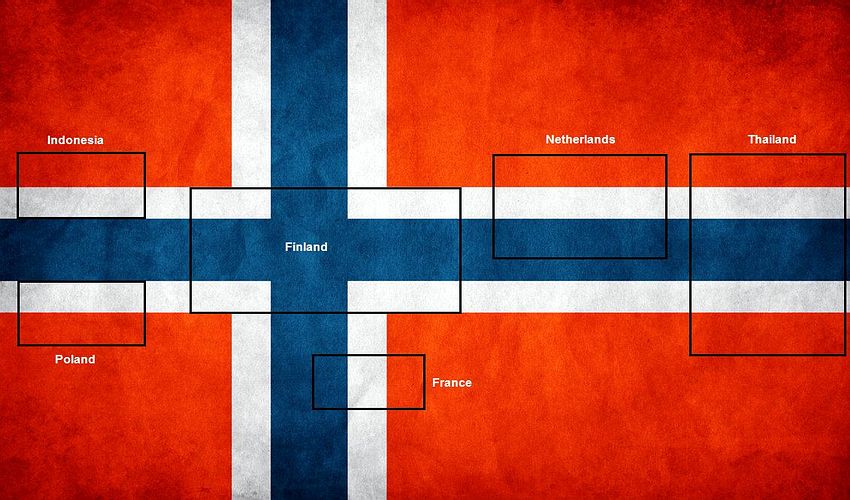
Superimposed on this flag of Norway are the flags of Indonesia, Poland, Malta GC, Finland, France, The Netherlands and Thailand.
You could also add the flag of Serbia & Montenegro directly underneath the Dutch flag.
The flags of Luxembourg, Croatia and Paraguay (the latter two with coat of arms removed) closely resemble the Dutch flag.
And the flag of Monaco is almost identical to that of Indonesia.
Author: Alex Crouch, Flag Institute accredited journalist 2015/16.

I love flags very much as well man but this article… I mean who cares.. 😯 😯
I do
.. and I. nice job.
… and I. great job
I think that there could have been more detail about the flag in the paragraph.
you forgot monaco
He didn’t if you actually read the article you would know.
you forgot malta too
The Dutch flag is older, so is that of France (inspired by the Dutch flag) if the flag of Norway is indeed designed in 1821 and used afterwards. Despite your fancy title of accredited Flag Institute journalist, I recommend to do a bit more research before making these claims.