Australia adopted its national flag on 3 September 1901, and King Edward VII officially recognised it seventeen months later.
Its designers were Ivor Evans, Leslie John Hawkins, Egbert John Nuttall, Annie Dorrington and William Stevens.
Ivor Evans was a 14-year-old Melbourne schoolboy; teenager Leslie Hawkins, a Sydney optician’s apprentice; Egbert Nuttall, a Melbourne architect; Annie Dorrington, a Perth artist; and William Stevens, a ship’s officer from Auckland, New Zealand.
They had entered a national competition promoted by Review of Reviews for Australasia, later merged with one launched by Australia’s first PM, Sir Edmond Barton.
All impressed the judges in the following criteria: loyalty to the empire, federation, history, heraldry, distinctiveness, utility and cost to manufacture.
Their designs were so alike that they shared the AU£200 prize.
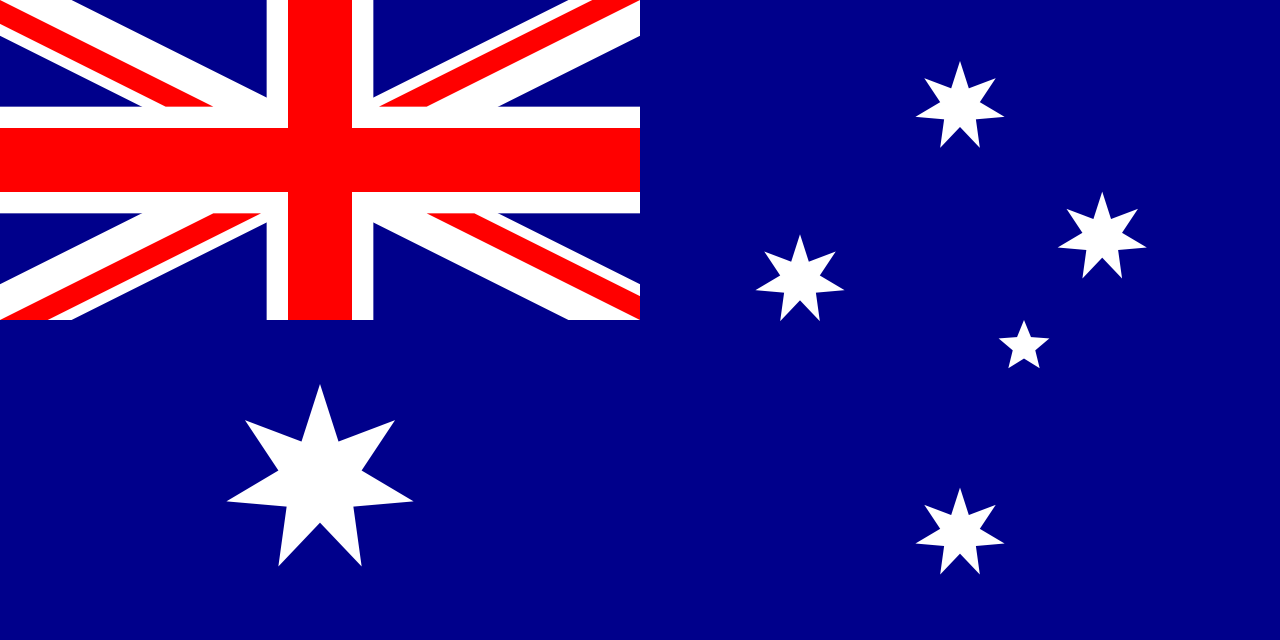
Closely resembling the New Zealand flag, the Australian flag is distinguished by its six white stars.
Located under the Union Flag is a seven-pointed Commonwealth Star.
Six points represent Australia’s federated states, while the seventh represents the Capital and Northern Territories, and the Norfolk, Christmas and Cocos Islands.
The other five stars make up the constellation Crux, more commonly known as the Southern Cross.
All are members of the Crucis family: (clockwise) Gamma, Delta, Epsilon, Alpha and Beta.
In 2013 Australian research agency McCrindle published findings stating that 95 per cent of Australians take pride in their flag.
Fifty per cent said they were ‘extremely’ proud.
“The English flag may flutter and wave, where the world wide oceans toss, but the flag the Australian dies to save, is the flag of the Southern Cross.” – Banjo Paterson.
Bonus fact: the 1901 flag design competition attracted almost 33,000 submissions; some featured indigenous animals and even cricket.
Author: Alex Crouch, Flag Institute accredited journalist (2015/16).